Watch the event
A market evolution not revolution
In the past year, electricity prices have broken record after record across Europe. Inflation, the war in Ukraine and a historic gas supply crunch have played a role in this harsh reality. What solutions are at hand to help Europe emerge from this crisis with a stronger and more sustainable economy? Can the electricity market design be rewritten to both protect customers from price volatility and attract the massive investments needed to reach net-zero?
Even though most interventions and measures adopted across the continent have been focused on electricity prices, the current price distress is the result of a gas supply crisis, not a market design crisis.
For decades, the current market has enabled the short-term optimisation of the power system, by prioritising the dispatch of the cheapest and most efficient energy sources, such as renewables and nuclear, before turning to more emitting sources.
This design has enabled clear price signals to spur investment in renewable sources and has ensured cross-border trade between countries, thereby reinforcing the EU internal market and the EU’s security of supply.
Preserve what works
Our biggest achievement
Europe has the largest synchronous electricity grid in the world connecting
<400
million customers across 24 European countries
Why preserve the current market design?
1. Efficient dispatch – allowing to harness the low variable cost of renewables
2. Clear price signals – enabling trade for thousands of generators, prosumers, flexibility providers
3. More interconnections – leading to lower prices and strengthened security of supply
Source: ENTSOE
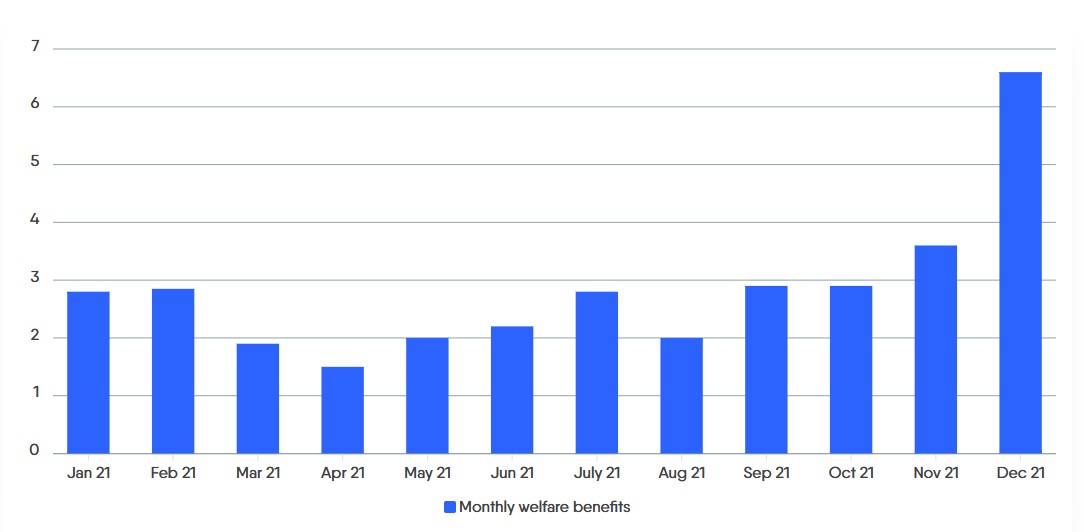
In 2021, cross-border trade and integrated electricity markets delivered over EUR 34 billion in benefits to consumers.
Monthly welfare benefits (billion Eur) from cross-border electricity trade in 2021
Source: ACER
Yet, the current energy crisis, triggered by Russia’s induced gas crunch, prevented consumers from benefitting from renewables’ low prices, as record-high natural gas became the price setter. This called for the need to mitigate the impact of short-term markets on the price of electricity paid by consumers.
Since European Commission President Ursula Von der Leyen called for a reform of the EU electricity market, several Member States have made headlines with their own reform proposals. From the radical Spanish and French non-papers to the more conservative joint letter from Germany and six other Member States, the debate has reached the highest levels of EU policymaking.
As detailed in Eurelectric’s response to the Commission’s consultation, the fundamentals of the electricity market must be preserved. Marginal pricing and integration across national markets are the best way to ensure that power system assets are used as efficiently as possible across the continent.
1
In many EU Member States, gas prices currently have a considerable influence on electricity prices due to their share in the energy mix. The weight of gas in the electricity generation mix is decreasing though, and we need to fast-track this transition. Renewable and low-carbon energy sources can offer energy at relatively low and stable costs. However, their potential advantages for the customers may not always be visible in the consumers’ bills due to the influence of short-term price signals on forward prices.
2
Having said that, wholesale markets based on merit order and marginal pricing ensure short-term optimisation and operation of the energy system, notably ensuring an efficient dispatch of generation and flexibility, efficient imports/exports, and cross-border sharing of resources to integrate renewables and strengthen security of supply.
Reducing households and businesses’ exposure to price volatility is not the only challenge the new reform must tackle.
Investment in clean technologies must drastically accelerate
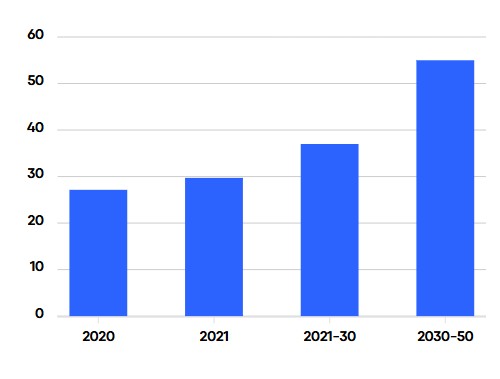
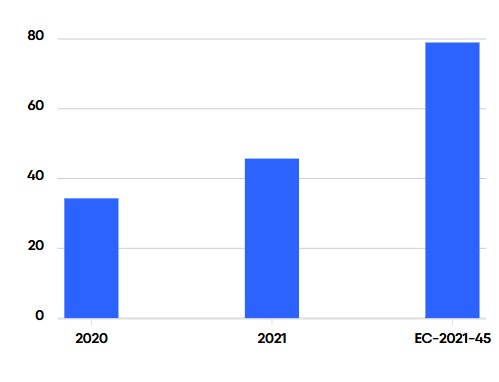
Investment levels in the power sector today are insufficient to deliver net-zero by 2050. If nothing is done to reassure investors, Europe’s decarbonisation progress will risk years of delay. Market design rules must preserve, and even boost, investors’ appetite for clean and renewable electricity generation, distribution grids, storage, flexibility solutions and, ultimately, the electrification of the economy.
Investments in distribution grids in EU-27 (billion €)
Source: Based on IEA WEO 2022, Eurelectric’s connecting the dot study, 2031-50 EC’s 2030 climate target impact assessment
Power generation investments in EU-27 (billion € 2020)
Source: Based on IEA WEO 2022, IEA 2031-45, EC’s 2030 climate target impact assessment
Key gaps in the current market design
The current market design needs to be upgraded to meet the investment challenge and support an efficient transition towards net-zero in the next decade. The key gaps in the current market design can be classified in three main categories:
1
The current EU long-term studies’ framework is insufficient to effectively inform and coordinate the large-scale investments required to reach European Green Deal objectives and the transition to a climate-neutral economy by 2050.
2
An investment framework is lacking in the current market design to support capital–intensive large-scale investment in clean technologies.
3
Consumer protection and engagement. Last, the short-term policy interventions introduced during the energy crisis have demonstrated the shortcomings of consumer protection and engagement arrangements in the energy market.
More long-term hedging instruments and contracts are required
Long-term contracts: Key for the build-out and mitigating price volatility
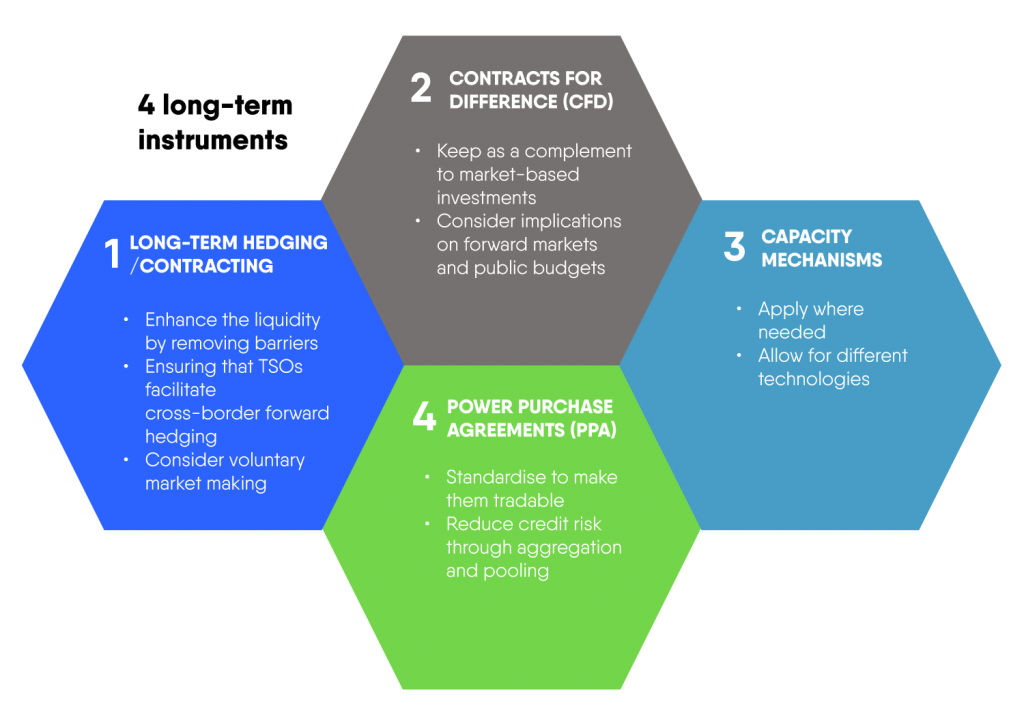
Yes to CFDs… but with caution
– They should be used on a voluntary basis only
– There is no ‘one-size-fits-all’ CfD – an adequate design matters
– A massive use of CfDs would raise questions on how to pass costs to customers and hinder liquidity on forward markets
Forward hedging as well as power purchasing agreements (PPAs) and contract for difference (CfDs) all have a role to play.
These instruments would allow consumers to negotiate a fixed price for part of their energy demand thus avoiding excessive exposure to short-term market prices. At the same time, these contracts can reassure investors by providing price stability and long-term visibility on returns and encourage them to reinvest in renewable generation or additional storage and flexible capacity.
Which adjustments?
A market design fit for the net zero must build on the current market and add on three pillars meant to better protect customers, boost investment and better assess capacity needs. It would look as follows:
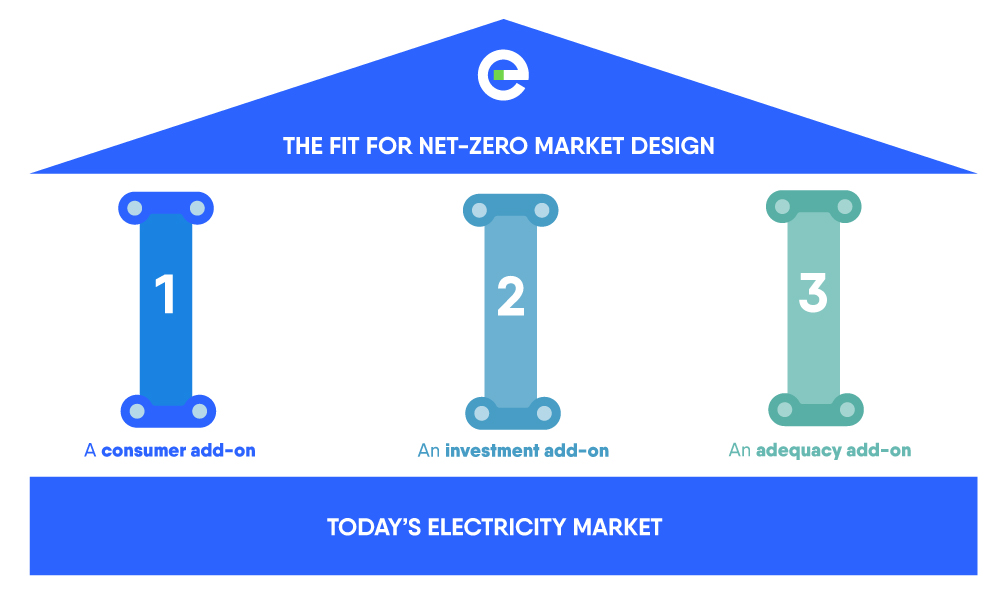
Add-on 1: Give customers a choice
An enhanced and liquid long-term contracting framework is key to meet generators and consumers’ needs. Diverse products including contracts for 2-4 and even up to 10-15 years or longer will smooth out price risks for both sides and allow consumers to receive the benefits from less volatile energy costs.
Add-on 2: Boost investment drastically
The investment challenge requires a stronger framework. The objective is to foster timely investment and reduce financing costs in order to meet decarbonisation objectives while maintaining high standards of security of supply, ensure affordability, reduce dependence and address system needs.
Add-on 3: Better coordinate system needs
The fast decarbonisation of the electricity system raises new challenges for its safe operation. Flexibility sources and firm power will need to expand to accompany renewables, taking advantage of the new opportunities that will emerge from the electrification of transport, industry and buildings.
Our Recommendations
1. Empower Consumers
- Enhance long-term contracting with diverse products up to 10-15 years or beyond the current horizon of forward markets;
- Remove barriers to long-term contracts;
- Allow suppliers to adapt their hedging strategy to their customers’ portfolio and avoid a one-size-fits-all approach to CfDs and hedging.
2. Invest in generation
- Promote PPAs’ standardisation and transparency;
- Ease collateral requirements to raise liquidity in forward markets;
- Remove disincentives to forward hedging for generators (such as renewables support schemes exclusively linked to spot prices).
3. Strengthen resilience
- Define common indicators, methodologies and responsibilities to expand system planning and support increasing renewable rates, flexibility and firm power needs;
- Design capacity markets to incentivise flexible and firm assets such as hydro, nuclear, and storage, to be dispatched at times of need;
- Encourage demand-side response by removing entry barriers to the market.
Deep dive: A word from the experts
“The energy crisis has heightened consumers’ worries about prices and governments’ concerns about security of supply. A necessary evolution of the system must not be feared but encouraged. A new forward-looking electricity market built on long-term price signals could be Europe’s lifeline against fossil-driven price turmoil, accelerate the energy transition towards our net-zero goals, and protect customers while increasing EU industrial competitiveness should be our goal.”

“With 80 GW targeted RES capacity in 2030, ENGIE’s ambitions require a well-functioning EU electricity market that also provides long term investments signals. Fostering the use of renewable power purchase agreements (PPAs) and flexibility mechanisms is essential to meet our goals as well as ensuring our security of supply. Policy makers and actors will find key recommendations in the Eurelectric report, to accelerate the path towards a net-zero economy in the EU, to the benefit of the consumers.”

“PKEE welcomed the fact that Commission’s proposal does not prolong the crisis measures adopted in the last year, such as the revenue cap imposed on electricity producers. However, provisions regarding Contracts for Difference or the way suppliers will hedge their portfolio through selected instruments like PPAs should be adjusted to the market reality in order to find a right balance between consumer protection and stimulating environment for investors, without neglecting the issue of energy security.”

“The current market design has provided efficient signals, fostered security of supply, and contributed to the decarbonization process. However, it is necessary to encourage forward markets so that customers can benefit from renewable generation, while boosting investments to advance the energy transition. In addition, security of supply must continue to be ensured, for which capacity markets must be integrated into the market design.”

„Europe wants to succeed in the transformation to a climate-neutral and at the same time prosperous economy. We therefore need an efficient market design that provides affordable prices for all customers, guarantees security of supply and stimulates investments in renewables technologies. The package of recommendations developed by Eurelectric will make an important contribution.“

“This study is highly relevant and timely. It provides a comprehensive overview of the challenges ahead of us, and more importantly, a clear pathway to tackle them, as well as the concrete steps we must take if we want to drive decarbonization and electrification faster. It advocates for all parties – investors, companies, governments, regulators, and decision makers – to work together to guarantee an energy market in the EU that is future-proof. And calls for an evolution – not a revolution – in our approach, while providing a constructive and practical framework to achieve our collective ambition.”

“This study has provided a wonderful opportunity to gain a deep understanding of international experience in market design, review in detail the options available and input our experience with the Irish Single Electricity Market (SEM) to develop a clear consensus position on European Market reform.”

“European consumers deserve a broader choice of power contracts to become engaged in the energy transition. Time has come to roll out smart meters, remove national barriers to switch contracts and to improve information about the choices consumers face.”

“Europe will need to dedicate €84 bn annually in new power generation capacities to reach net zero by mid-century. This study makes a convincing case for the long-term instruments needed to enable these vital clean power investments.”

“When it comes to the market design, we don’t need to start from scratch to deliver clean, reliable and affordable electricity to customers, while also advancing our climate-neutral goals. Building on the existing structure we can create a resilient electricity market with mitigation tools that decrease the risk of reaching the spike moments again, while still incentivising investments.”